
We often look at 1,500-year-old monumental structures like the Hagia Sophia and imagine them as perfectly still, unchanging mountains of stone. But the truth is, they are dynamic entities that “breathe,” react, and move in response to their environment. Just like human bodies, buildings have a pulse, and understanding that pulse is the key to preserving them for future generations.
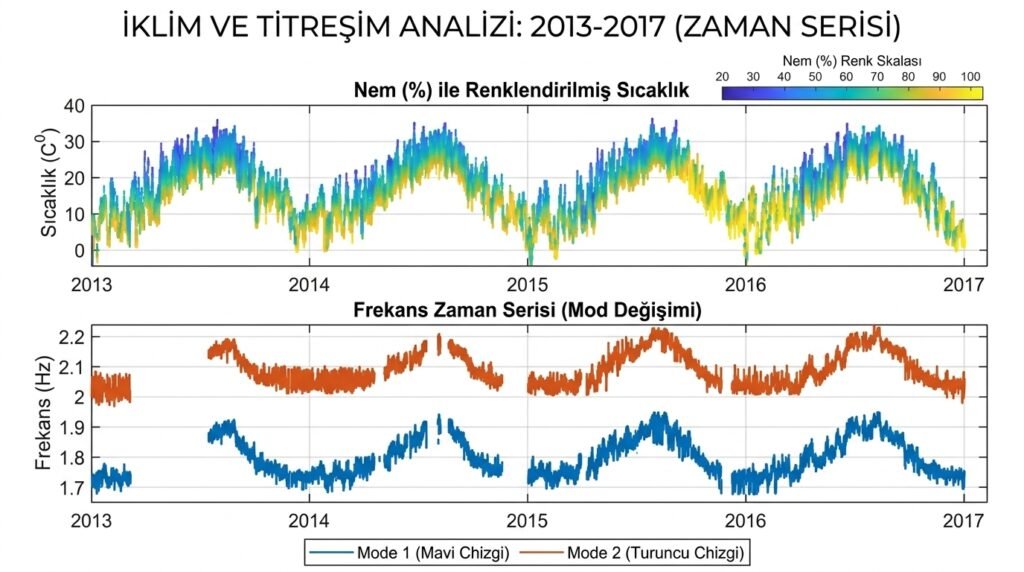
Between 2013 and 2017, a comprehensive structural health monitoring study captured the continuous “heartbeat”—or vibrational frequencies—of the Hagia Sophia. The findings revealed a fascinating secret: the most powerful environmental factor influencing this ancient giant is not just the passing of time, but the daily and seasonal temperature of the air around it.
Buildings Can “Shiver” Too
How exactly does a colossal masonry structure react to the weather? The data tells a compelling story of physics and architecture:
- The Freezing Effect: When the weather gets cold, especially as temperatures drop below +4°C and cross the freezing point of 0°C, the Hagia Sophia physically changes. The structure’s natural vibration frequencies noticeably increase, meaning the building becomes significantly stiffer.
- The Hidden Ice: Why does this happen? The secret lies in the microscopic world of the building’s materials. At +4°C, water reaches its lowest density. As the air gets even colder (down to -4°C, the lowest temperature recorded in the study), the moisture trapped inside the historic mortar and tiny capillary cracks begins to freeze.
- A Temporary Glue: This trapped ice acts like a temporary, microscopic glue that binds the masonry tighter together. This unique phenomenon makes the entire monument highly rigid during the winter months.
Why Listening to the “Pulse” Matters
Just as our muscles tense up in the freezing cold, the Hagia Sophia stiffens. This causes its first and second modal frequencies to jump by approximately 4% and 3%, respectively, during frosty periods. When observing the full seasonal cycle—from freezing winters to scorching summers—these baseline vibration frequencies can fluctuate by an astonishing 15% to 18%.
Understanding this natural, seasonal “breathing” is incredibly important for modern structural engineering. If we know exactly how the Hagia Sophia naturally reacts to a cold winter morning or a hot summer afternoon, we can instantly identify if a sudden change in its vibration is just a weather response, or if it is a warning sign of actual structural damage after an earthquake. By mapping its natural pulse, we can protect its future.
References:
Çaktı, E., vd. (2019). Recent Studies on Earthquake Performance Assessment of Hagia Sophia in Istanbul. Seismic Isolation, Structural Health Monitoring, and Performance Based Seismic Design in Earthquake Engineering.
Dar, E. (2024). Real-Time Structural Health Monitoring Using Statistical Methods (PhD Thesis), Boğaziçi University.
Hi, this is a comment.
To get started with moderating, editing, and deleting comments, please visit the Comments screen in the dashboard.
Commenter avatars come from Gravatar.